
When Robots Stumble, Ford Calls in the Retirees
When a modern automotive assembly line encounters a stubborn issue, the ultimate troubleshooting tool might not be a software patch. For Ford, it turned out to...
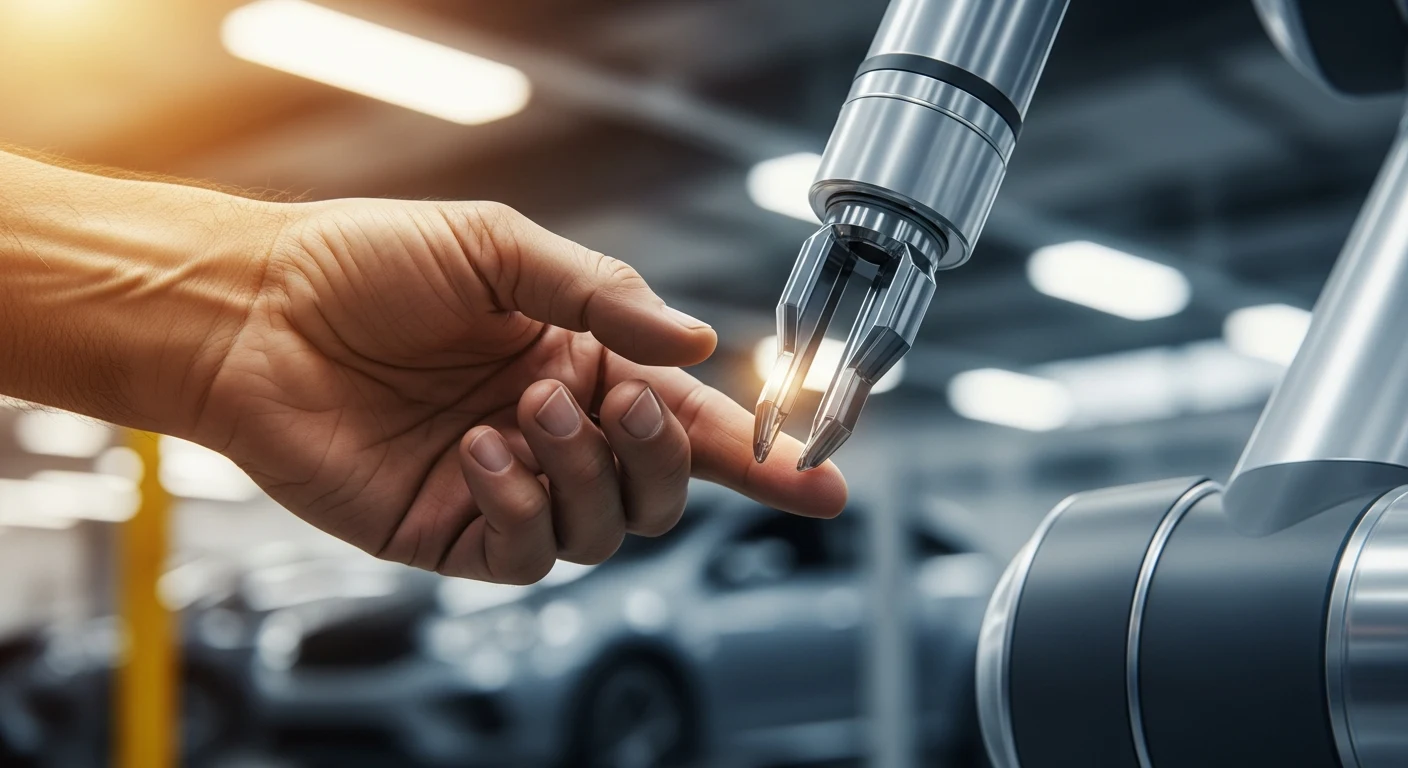
When a modern automotive assembly line encounters a stubborn issue, the ultimate troubleshooting tool might not be a software patch. For Ford, it turned out to be the seasoned intuition of former engineers.
Recently, Ford celebrated a major milestone: securing the number one spot in JD Power’s initial quality ranking among mainstream automakers. But behind this triumph lies a humbling story about the limits of artificial intelligence in heavy industry. Over the past few years, the company leaned heavily into automated design and production systems, anticipating a seamless leap in efficiency. Instead, they discovered that algorithms and robots were far less foolproof than the blueprints suggested, leading to a series of costly manufacturing mistakes.
To untangle the mess, Ford had to look backward to move forward. The automaker brought in highly experienced technicians—including former employees who had already left the company—to supervise, correct, and fix the errors made by their automated counterparts.
The root of the problem wasn't necessarily bad robotics, but rather a universal vulnerability in AI: data dependency. Ford executives acknowledged that artificial intelligence, while undeniably powerful, is fundamentally fragile when it encounters edge cases. An algorithm’s effectiveness is entirely bound by the quality and comprehensiveness of the data used to train it. In the highly complex, physical environment of car manufacturing, theoretical data often fails to capture the messy, nuanced realities of the factory floor. When the robots encountered situations outside their training parameters, they lacked the common sense to adapt.
This scenario serves as a vital reality check for industries rushing to adopt AI. While generative AI and digital automation have created a perception that human labor is becoming obsolete, the physical world presents a much higher barrier to entry. The veteran engineers Ford brought back possessed decades of tacit knowledge—the kind of intuitive, hands-on expertise that is incredibly difficult to quantify and feed into a machine learning model.
As other manufacturers observe Ford's pivot, the broader lesson becomes clear: deploying AI is not a "set it and forget it" solution. Companies must invest just as heavily in human oversight as they do in automated infrastructure. The most successful AI integrations will be those that treat algorithms as apprentices rather than masters, relying on the irreplaceable wisdom of human workers to teach the machines how the real world actually works.
Ultimately, Ford’s journey to the top of the quality charts wasn't achieved by replacing humans with machines, but by recognizing where machines fall short. It is a powerful reminder that the factory of the future cannot run on data alone. True industrial innovation requires a collaborative loop where cutting-edge automation is constantly guided, refined, and sometimes rescued by human experience.
Key Points
- Ford achieved top ranking in JD Power's initial quality study, but only after overcoming significant automation hurdles.
- The automaker had to rehire experienced former employees to fix mistakes generated by its AI and robotic systems.
- Ford highlighted that AI's effectiveness in manufacturing is strictly limited by the quality of its training data.
- The situation underscores the enduring value of human tacit knowledge in complex physical environments.
Why It Matters
Ford's realization serves as a powerful case study for the manufacturing sector, proving that human expertise remains a critical safety net when bridging the gap between theoretical AI capabilities and real-world industrial application.
Sources: