
Snap’s $2,195 AI Glasses Prove the Future is Still Too Heavy
Tech companies have spent years promising a future where we can seamlessly blend the digital and physical worlds just by slipping on a pair of glasses. But if...
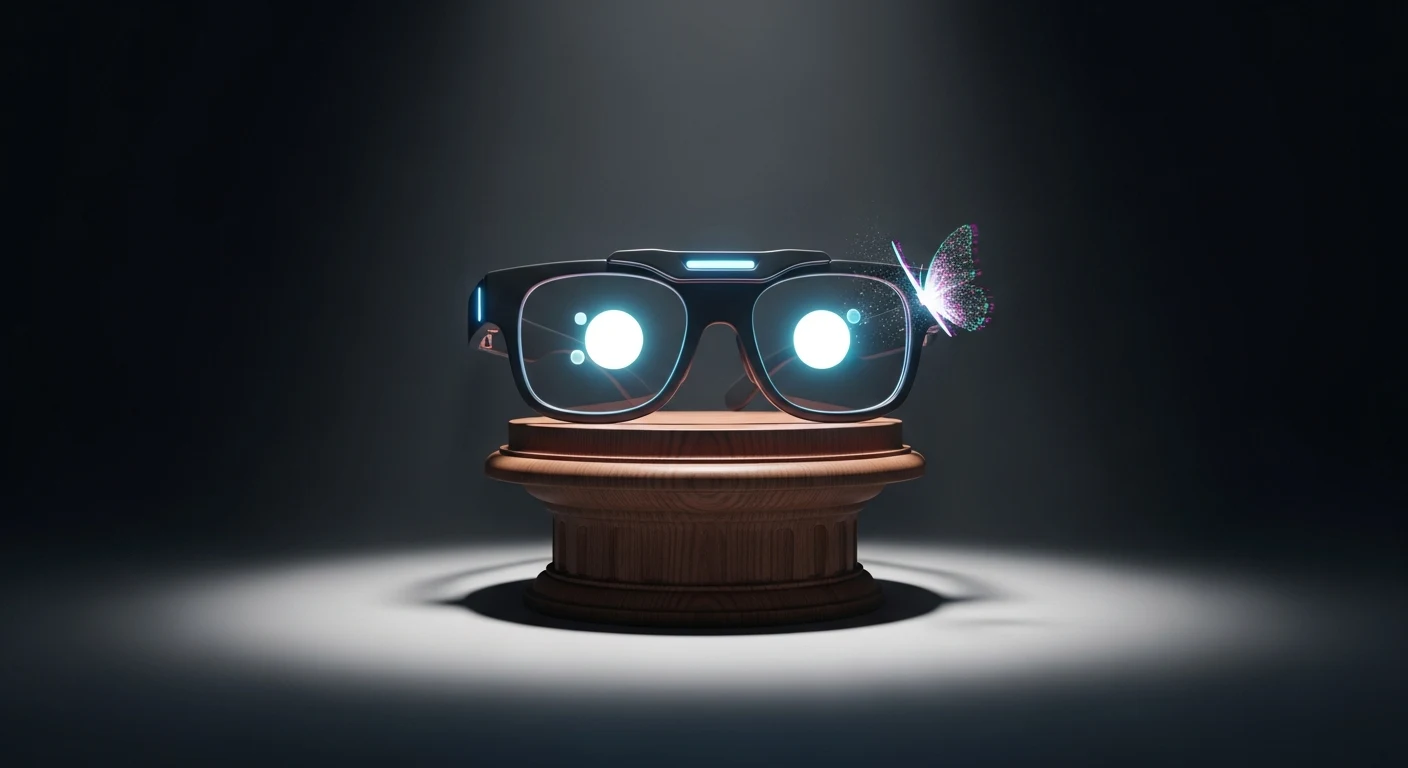
Tech companies have spent years promising a future where we can seamlessly blend the digital and physical worlds just by slipping on a pair of glasses. But if Snap’s latest foray into AI-powered augmented reality is any indicator, that future is currently overweight, overpriced, and incredibly fragile.
At the recent Cannes Lions advertising festival in France, Snap offered a highly curated demo of its upcoming AR Spectacles. The setup was an interactive art exhibit featuring portraits by Jonathan Yeo. The premise sounds like a neat party trick: an iPad scans your face, and the $2,195 glasses use AI filters to morph your features onto paintings of figures like King Charles, Jony Ive, or David Attenborough. You can watch an AI-generated version of yourself age or transform right on the canvas.
However, the reality of wearing the technology quickly shatters the illusion. The most immediate issue is physical comfort. A standard pair of eyeglasses weighs between 25 and 50 grams. Snap’s AR specs weigh a hefty 132 grams. Strapping what is essentially a bulky, face-mounted computer to your head is tolerable for a ten-minute demo, but it’s hard to imagine anyone wearing them for a daily commute or a prolonged work session.
Then there are the technical limitations. True augmented reality requires digital objects to interact flawlessly with the real world. Yet, during the demo, a virtual butterfly meant to land on the user's hand awkwardly clipped right through their fingers. Worse still was the system's brutal lack of flexibility. The experience demanded absolute stillness; simply turning your head slightly away from the painting caused the entire AR illusion to crash and reset.
This disjointed experience highlights a broader issue in the current tech landscape. As the AI boom continues, companies are desperate to break their algorithms out of the smartphone screen and into wearable hardware. But as reports suggest that Snap's own investors pleaded with CEO Evan Spiegel not to manufacture these glasses, it becomes clear that the underlying hardware simply hasn't caught up to the software's ambition.
We are currently in the awkward adolescence of AI wearables. Until these devices can offer genuine utility in a lightweight, forgiving, and comfortable form factor, they will remain exactly what they are today: expensive, heavy gimmicks that do little more than what your phone can already do.
Key Points
- Snap demoed its $2,195 AI AR glasses at Cannes Lions, using AI to overlay users' faces onto physical paintings.
- Weighing 132 grams, the glasses are significantly heavier and bulkier than standard eyewear.
- The AR tracking proved highly rigid; looking slightly away from the target canvas caused the experience to stop entirely.
- Reported pushback from Snap's investors underscores the industry-wide struggle to create viable, consumer-friendly AI hardware.
Why It Matters
The struggles of Snap's AR specs highlight the immense physical and technical hurdles that still prevent AI wearables from replacing our smartphones in everyday life.
Sources:
- Snap's AI Specs: LOL — 404 Media