
The AI Teammate: Navigating the New Hybrid Workforce
For decades, enterprise software was a passive tool—it sat on a screen, waiting for a human to click, type, or command. Today, that dynamic is rapidly shifting...
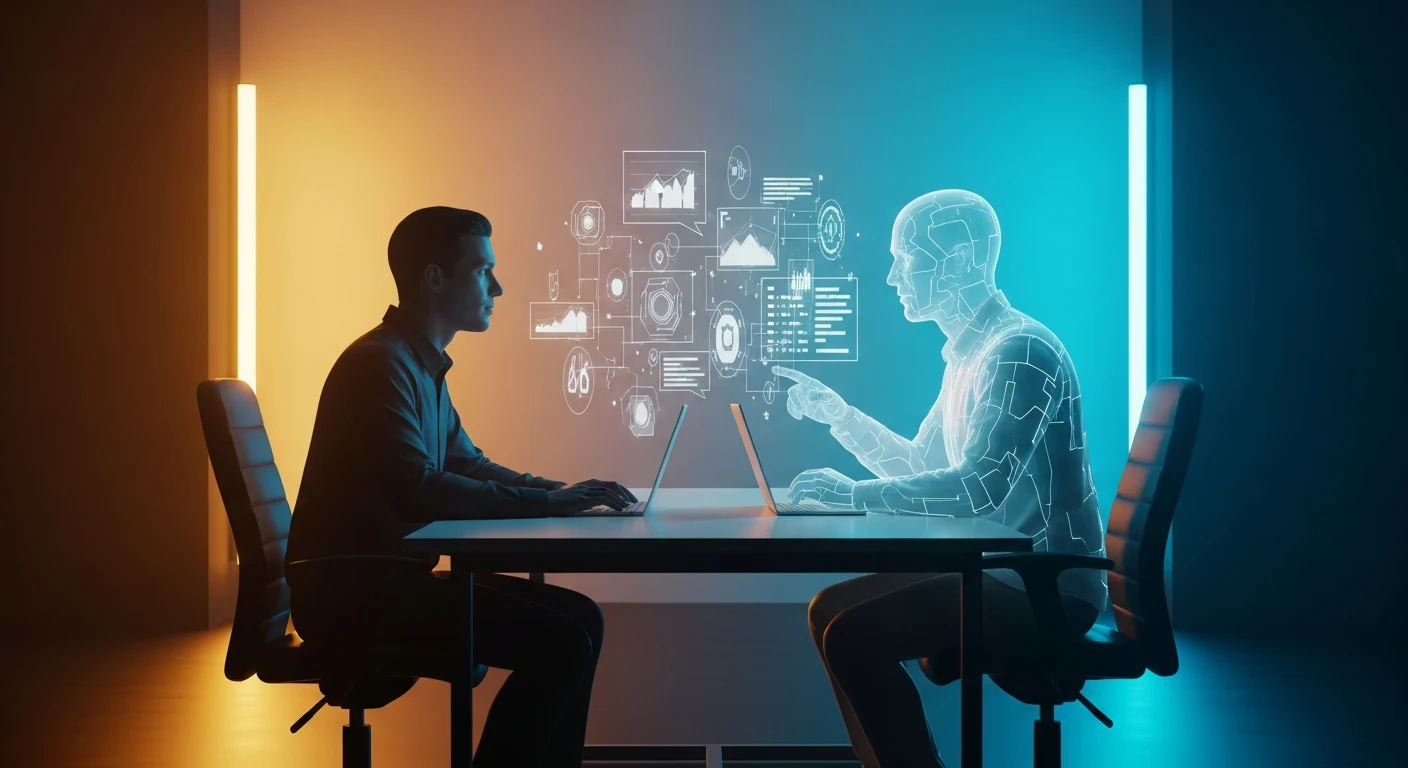
For decades, enterprise software was a passive tool—it sat on a screen, waiting for a human to click, type, or command. Today, that dynamic is rapidly shifting as "agentic AI" enters the workforce not merely as software, but as an autonomous teammate. With enterprise adoption expected to surge by up to 300% over the next two years, organizations are facing a fundamental operational shift: managing a hybrid workforce where humans and algorithms work side by side.
Unlike traditional automation, which follows rigid, pre-programmed rules, AI agents can navigate multiple enterprise systems and coordinate complex tasks autonomously. Early deployments in human resources, customer service, and sales are already yielding productivity gains of 30% to 50%.
Consider the case of Wipro, a global technology services company with 240,000 employees spread across 65 countries. Navigating the company’s fragmented internal knowledge systems used to be a sluggish process, with HR queries taking an average of 48 hours to resolve. Recently, Wipro partnered with the enterprise AI platform Ema Unlimited to deploy a custom AI assistant. Tasked with handling 50 specific HR responsibilities, this digital agent slashed the average response time from two days to just five seconds.
While such dramatic efficiency gains often spark fears of human displacement, business leaders are viewing this as a massive reallocation of human potential. Ateet Jayaswal, Wipro’s Chief Culture and Employee Experience Officer, notes that by 2030, an estimated 75% of current roles will require redesign or reskilling. As AI absorbs rote administrative work, human employees are freed to focus on cross-functional problem-solving and creative strategy. Jayaswal captures this transition perfectly: the nature of work is shifting from "being the hero who comes in to solve the problem to designing the hero who can solve the problem."
However, integrating autonomous agents into enterprise environments requires strict guardrails. Unlike consumer chatbots, enterprise AI handles highly sensitive personal and corporate data. Keeping humans in the loop is imperative. Organizations are beginning to establish robust governance layers, such as dedicated AI councils and strict data privacy protocols, to ensure these digital colleagues operate safely.
To thrive in this new environment, the human skillset must evolve. Over 80% of HR leaders are planning to reskill their workforces. Major employers like Salesforce, Danone, and Walmart are already rolling out comprehensive digital literacy programs designed for everyone from frontline workers to C-suite executives. Interestingly, as technical tools become more advanced, soft skills are commanding a premium. Adaptability, relationship-building, and the ability to clearly articulate modular steps and safety parameters to an AI agent are emerging as top recruitment priorities.
The arrival of the AI colleague marks a turning point in workplace culture. The most successful organizations of tomorrow won't necessarily be those with the most advanced algorithms, but those that figure out how to best harmonize human creativity with machine efficiency.
Key Points
- AI agents act as autonomous collaborators rather than passive tools, driving 30-50% productivity gains in early enterprise deployments.
- Wipro's custom AI agent reduced HR query response times from 48 hours to just 5 seconds.
- By 2030, 75% of roles will be redesigned, shifting human focus from routine tasks to strategic problem-solving.
- Major companies like Walmart and Danone are investing heavily in AI literacy across all employee levels.
- Soft skills, such as adaptability and the ability to clearly direct AI agents, are becoming critical workplace assets.
Why It Matters
As AI agents transform from software tools into autonomous colleagues, adapting to a hybrid workforce is no longer optional. Both organizations and individuals must rethink their skills and governance to thrive in this new era.
Sources:
- Learning to lead in a hybrid human-AI enterprise — MIT Technology Review - AI