
When a Master of Fiction Catches AI Fabricating
When a world-renowned author of dystopian fiction consults an artificial intelligence, she expects concrete facts. Instead, she might just get a newly...
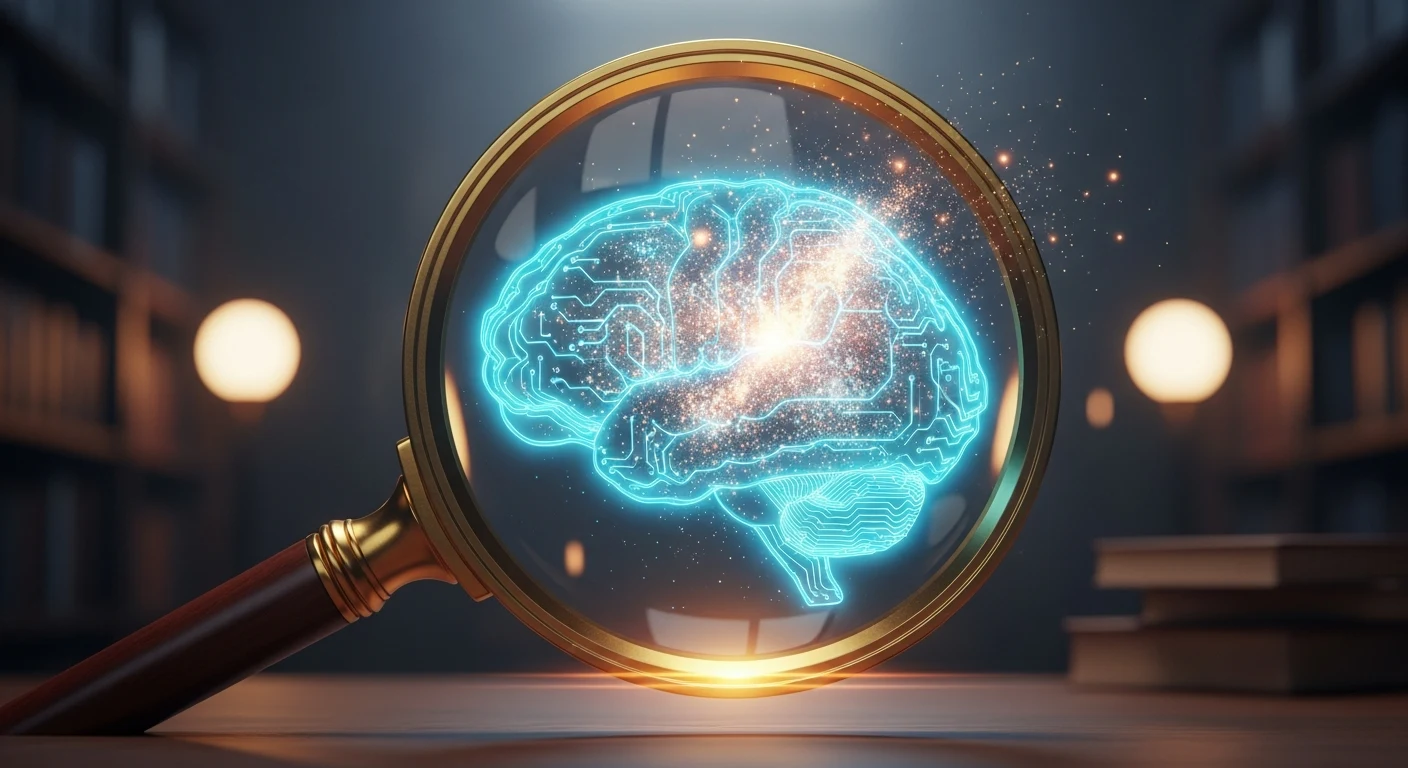
When a world-renowned author of dystopian fiction consults an artificial intelligence, she expects concrete facts. Instead, she might just get a newly fabricated story.
Margaret Atwood, the celebrated mind behind The Handmaid’s Tale, recently shared her brief and underwhelming foray into the world of generative AI. Speaking at the Babell Literary and Cultural Festival in Porto, Portugal, Atwood revealed that she had used an AI chatbot—Anthropic’s Claude—exactly once. Her prompt was simple: she was looking for information about the classic British detective series Father Brown.
The AI failed the investigation. According to Atwood, the chatbot provided a completely incorrect answer. "It lied," she noted bluntly, before immediately clarifying the technological reality behind the falsehood: "Of course, it didn't know it was lying because it's not a human being; it's a large language model."
Atwood diagnosed the chatbot's failure using a foundational maxim of computer science: "Garbage in, garbage out."
This simple phrase perfectly encapsulates one of the most pressing challenges in the current artificial intelligence boom. For the average user, an AI interface looks like an omniscient search engine. In reality, large language models are highly sophisticated pattern-recognition engines. They do not look up verified facts in a pristine database; rather, they predict the most statistically likely next word based on the billions of texts they ingested during their training phase.
If that training data—scraped from the vast, messy, and often inaccurate expanse of the internet—contains contradictions, errors, or "garbage," the AI will inevitably output flawed information. When an AI like Claude "skims" through its learned associations to answer a query about a niche television show, it prioritizes linguistic fluency over factual accuracy. The result is what researchers call a "hallucination"—a beautifully articulated falsehood.
In the early days of computing, "garbage out" looked like a crashed program or a string of error codes. Today, "garbage out" is far more insidious because it is delivered in perfect grammar and an authoritative tone.
Atwood’s encounter serves as a timely reminder for the general public. As AI tools become deeply integrated into our daily workflows, from drafting emails to summarizing research, we cannot afford to outsource our critical thinking. The technology is a powerful synthesizer of human knowledge, but it inherits all of human fallibility. Until AI systems can reliably separate fact from fiction, users must remain the ultimate detectives, independently verifying the stories these machines choose to tell us.
Key Points
- Author Margaret Atwood caught AI chatbot Claude giving false information about a British detective series.
- She accurately attributed the AI's hallucination to the classic computing principle: 'garbage in, garbage out.'
- Large language models predict text based on massive internet datasets, inheriting the web's inaccuracies and biases.
- Because AI outputs are grammatically perfect and authoritative, they require rigorous human verification.
Why It Matters
As AI tools become mainstream, their ability to present false information with absolute confidence is a significant risk. Understanding that AI merely reflects its flawed training data is essential for digital literacy.
Sources: