
South Korea’s All-In Bet on an AI-Powered Future
Step into Seoul’s bustling Gangnam district, and the future feels distinctly present. Delivery robots wait patiently at crosswalks, interactive bus stops are...
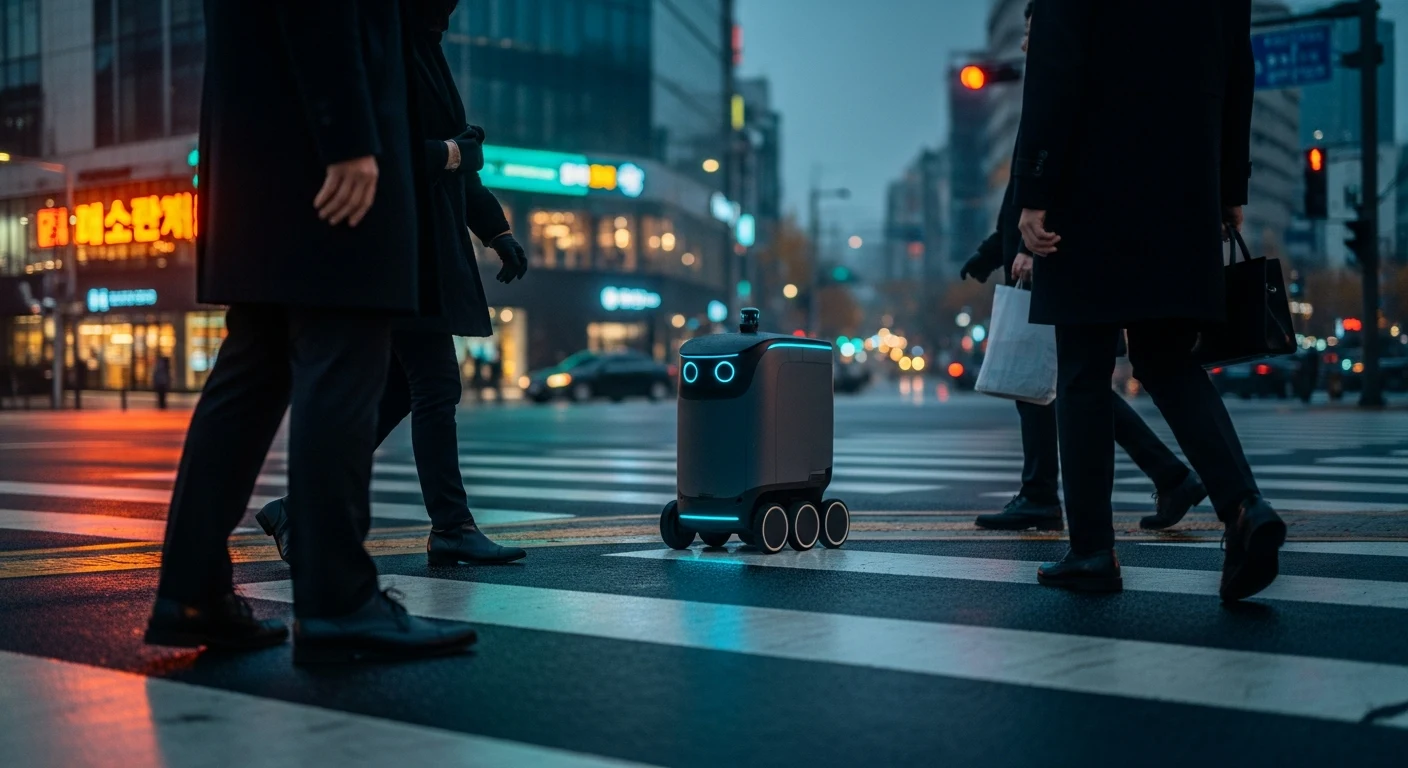
Step into Seoul’s bustling Gangnam district, and the future feels distinctly present. Delivery robots wait patiently at crosswalks, interactive bus stops are evolving into multilingual AI kiosks, and virtual K-pop idols dominate digital billboards. While much of the Western world is gripped by existential anxiety over artificial intelligence, South Korea is busy stress-testing it on the streets.
The divergence in public sentiment is striking. According to the Pew Research Center, only 16% of South Koreans are more concerned than excited about AI—the lowest among 25 surveyed nations. In contrast, half of Americans view the technology with apprehension. In South Korea, AI isn't a looming threat; it's a daily utility. From government-deployed AI eldercare robots in welfare centers to AI-generated webcomics, the nation has embraced its role as a living laboratory for next-generation tech.
This techno-optimism isn't purely organic; it is deeply rooted in a national survival strategy. South Korea’s economic ascent—from steel and ships in the 1970s to smartphones in the 2000s—has always relied on aggressive technological adoption. Today, the economy orbits around semiconductor giants Samsung and SK Hynix, which supply the crucial high-bandwidth memory (HBM) chips that power global AI models. Recognizing this advantage, the government has pushed a top-down agenda to cement the country as a global AI powerhouse. This includes establishing the AI Basic Act, designed to foster innovation with light-touch regulation, and providing substantial state funding for sovereign AI models.
Yet, this relentless drive for economic modernization comes with inevitable blind spots. Prioritizing speed over societal reflection has sparked real-world friction. The government recently faced a fierce public backlash after rushing AI textbooks into schools without pilot testing, exposing students to factual inaccuracies and data privacy risks. Meanwhile, the prospect of automation is triggering labor anxieties. When Hyundai announced plans to deploy Atlas humanoid robots in its factories, the autoworkers' union vehemently protested, demanding a halt to new tech integration without strict labor agreements.
South Korea offers the rest of the world a preview of a highly integrated AI society. It demonstrates that while government backing and cultural enthusiasm can rapidly accelerate AI adoption, the human elements—privacy, job security, and ethical deployment—still require careful, deliberate navigation.
Key Points
- South Korea has the lowest AI anxiety among 25 surveyed nations, with only 16% expressing more concern than excitement.
- The country acts as a massive testbed for AI, deploying everything from multilingual AI bus stops to eldercare robots.
- The government heavily subsidizes AI and semiconductor industries, viewing them as critical to national economic survival.
- Rapid adoption has caused friction, highlighted by protests over untested AI textbooks and humanoid factory robots.
Why It Matters
As one of the world's most aggressive adopters of AI, South Korea provides a real-time case study of how societies balance the massive economic benefits of artificial intelligence with emerging ethical and labor challenges.
Sources:
- Why do South Koreans love AI so much? — MIT Technology Review - AI