
The Mind-Reading Power User: How AI Restored an ALS Patient's Voice
When we hear the term "power user," we typically picture software developers, hardcore gamers, or digital artists. But one of the world’s most remarkable power...
When we hear the term "power user," we typically picture software developers, hardcore gamers, or digital artists. But one of the world’s most remarkable power users is an environmental activist who operates his computer entirely with his mind.
Casey Harrell was diagnosed with amyotrophic lateral sclerosis (ALS), a progressive neurodegenerative disease that gradually robbed him of his ability to move and speak clearly. For many, this diagnosis means a shrinking world, increasingly dependent on caregivers for the most basic tasks. But in July 2023, Harrell volunteered for a five-hour brain surgery at the University of California, Davis, stepping onto the bleeding edge of artificial intelligence and neuroscience.
Surgeons implanted four microelectrode arrays—totaling 256 electrodes—directly into Harrell's speech motor cortex, the brain region responsible for the intricate muscle movements required to talk. These electrodes connect to a computer via two small pedestals on his skull.
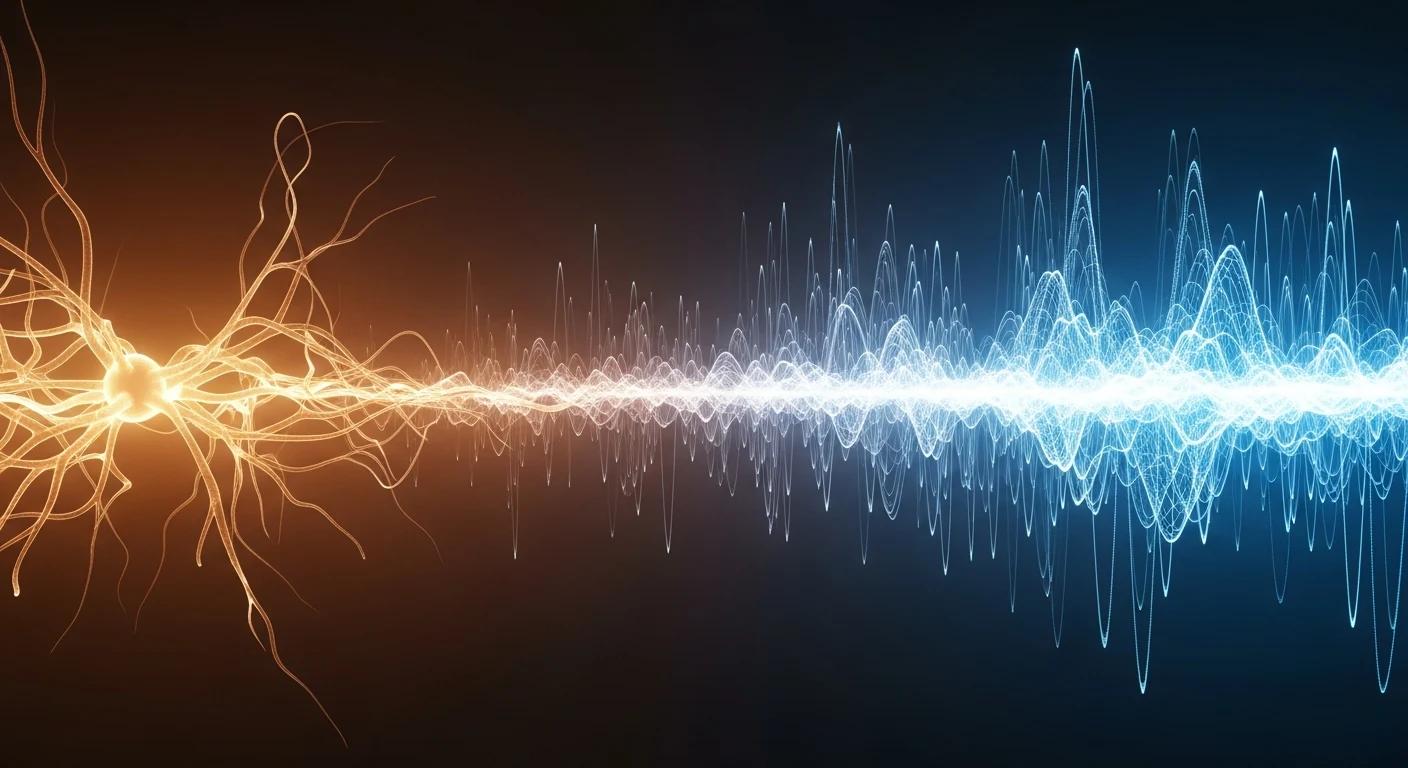
The true magic, however, lies in the AI algorithms decoding his neural signals. Rather than trying to guess whole words, the system breaks language down to its foundation. It maps Harrell's brain activity to the 39 phonemes that make up American English. By translating neural impulses into phonemes, and phonemes into words, the AI creates a highly personalized speech decoder. The results were immediate: on the first day of testing, Harrell achieved 99.6% accuracy with a 50-word vocabulary. Today, that vocabulary has expanded to 125,000 words, maintaining an astonishing 99% accuracy rate.
What makes Harrell's case historic, recently detailed in the journal Nature Medicine, is how the technology has integrated into his daily life. Brain-computer interfaces (BCIs) have historically been confined to sterile lab environments, requiring a team of researchers to operate. Harrell shattered that paradigm. In less than two years, he logged over 3,800 hours of use at home without any scientists present. Once his caregiver plugs him into the system each morning, Harrell takes over.
He uses a mind-controlled cursor to surf the web, send emails, and continue his work as an environmental activist. He even asked developers for custom features to suit his real life: a "privacy mode" that automatically deletes decoded text, and a "profanity filter" he toggles on when chatting with his young daughter.
Experts caution that this is not a universal cure. Mariska Vansteesel, a BCI researcher at Utrecht Medical Center, notes that long-term efficacy remains a hurdle. Brain degeneration from ALS or the buildup of scar tissue around the electrodes can eventually degrade the signal. Furthermore, invasive brain surgery carries inherent risks that not all patients are willing to accept.
Despite these hurdles, Harrell’s journey represents a monumental leap for medical AI. It proves that brain-computer interfaces can transition from experimental lab demonstrations to reliable, everyday assistive tools. For Harrell, the technology has done more than just restore his voice—it has preserved his autonomy. "Living with a disease like ALS, you are supposed to have diminished dreams," he noted. "I do not."
Key Points
- ALS patient Casey Harrell uses a 256-electrode brain implant to turn his thoughts into text.
- The AI decodes brain signals into 39 English phonemes, achieving 99% accuracy across a 125,000-word vocabulary.
- Harrell logged over 3,800 hours of independent home use, proving the technology's viability outside the lab.
- While groundbreaking, experts warn that scar tissue and disease progression could affect long-term device performance.
Why It Matters
This breakthrough demonstrates that AI-driven brain-computer interfaces are finally mature enough for independent, real-world use, offering profound hope for restoring autonomy to paralyzed individuals.
Sources:
- This man with ALS is “the first power user” of a brain implant that lets him speak — MIT Technology Review - AI