
Why OpenAI Built Its Own 'Jalapeño' Chip
For all the seemingly magical text and code generated by artificial intelligence, the physical reality behind the screen is distinctly industrial: massive...
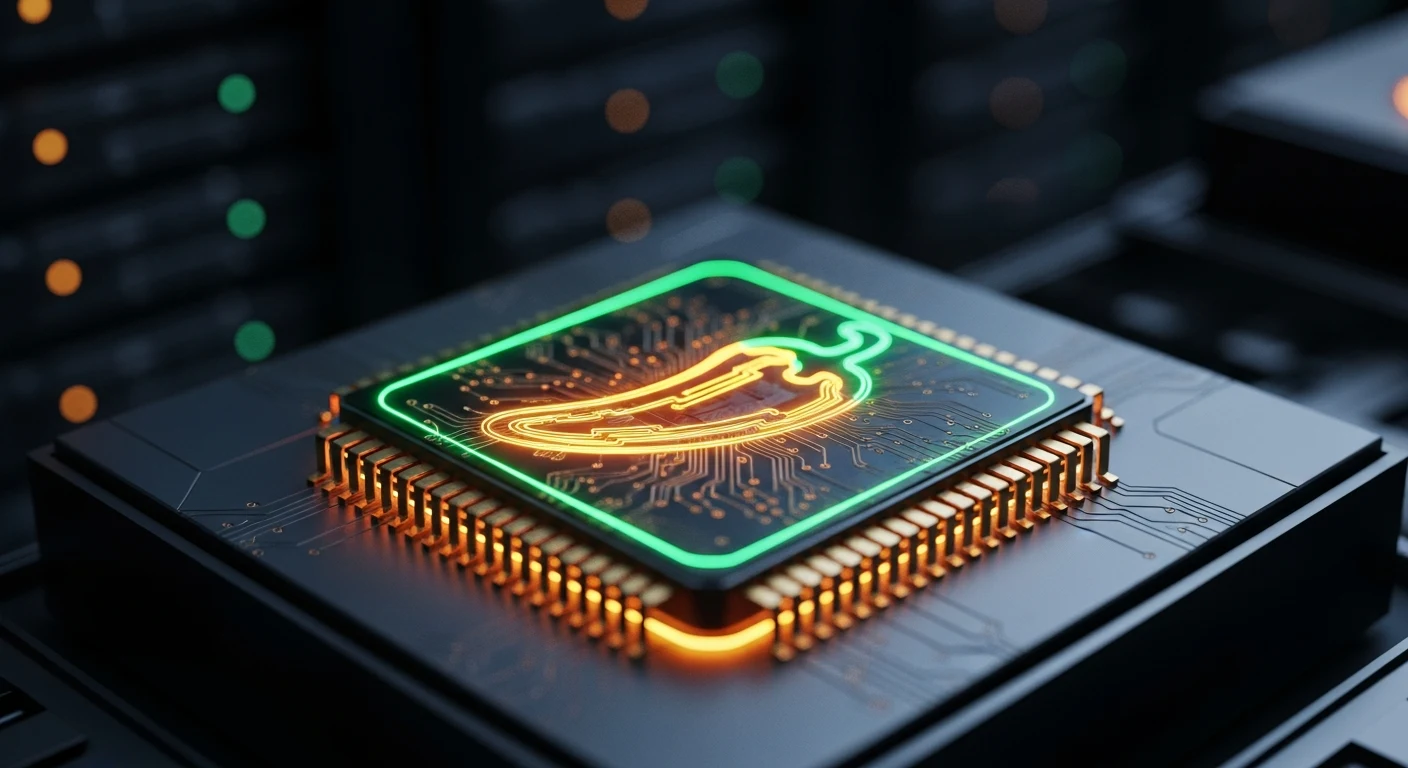
For all the seemingly magical text and code generated by artificial intelligence, the physical reality behind the screen is distinctly industrial: massive warehouses packed with power-hungry silicon. Now, the company behind the world’s most famous chatbot is building its own hardware to keep those servers humming.
OpenAI has officially unveiled "Jalapeño," its first-ever custom intelligence processor. Developed over the past nine months in partnership with semiconductor heavyweight Broadcom, this new chip isn't meant to build the next generation of AI from scratch. Instead, it’s designed to make the AI we already use much more efficient.
To understand exactly what Jalapeño does, it helps to look at the two distinct phases of an AI's lifecycle: training and inference. Training is the arduous, energy-intensive process of feeding a model billions of words, images, and data points until it learns how language and logic work. It is the equivalent of sending a student to medical school for a decade. Historically, this phase has commanded the most attention and the most expensive, generalized hardware.
Inference, on the other hand, happens the moment you hit "send" on a prompt. It is the model applying what it has already learned to answer your specific question, much like a doctor diagnosing a patient based on their symptoms. As AI tools have exploded in popularity, inference has become a massive, continuous workload. Every time someone asks ChatGPT to summarize an email or uses Codex to generate a software script, inference is happening.
Jalapeño is an Application-Specific Integrated Circuit (ASIC) built exclusively for this inference phase. By moving away from off-the-shelf, general-purpose processors for daily tasks, OpenAI is optimizing its physical infrastructure. General chips are incredibly powerful but often carry features that a highly specialized task doesn't need. An ASIC strips away the unnecessary, focusing entirely on doing one specific job as fast and efficiently as possible.
The reveal of Jalapeño marks a significant maturation for OpenAI. It suggests that the bottleneck for artificial intelligence is no longer just about writing smarter algorithms; it is about delivering those algorithms to hundreds of millions of users without breaking the bank on computing costs. By co-designing hardware tailored exactly to its own software, OpenAI is ensuring that as our reliance on AI grows, the digital brains answering our questions can do so faster, cheaper, and more sustainably.
The move mirrors a broader trend in the tech industry, where software giants eventually realize that controlling their own silicon is the key to long-term dominance. As the AI hardware race heats up, Jalapeño proves that the future of artificial intelligence isn't just in the cloud—it's etched into custom silicon.
Key Points
- OpenAI unveiled Jalapeño, its first custom AI processor developed with Broadcom.
- The chip is an ASIC designed exclusively for AI inference, not training.
- Custom silicon allows OpenAI to run models like ChatGPT and Codex much more efficiently and cheaply.
Why It Matters
As AI usage scales globally, the cost of running models daily outpaces the cost of training them. Custom inference chips like Jalapeño are critical for making AI economically sustainable.
Sources:
- OpenAI reveals its first AI processor: Jalapeño — The Verge - AI