
The Era of Self-Taught Robots Has Arrived
History is littered with terrible technology predictions. Nobel laureate Paul Krugman famously declared that the internet's economic impact would be no greater...
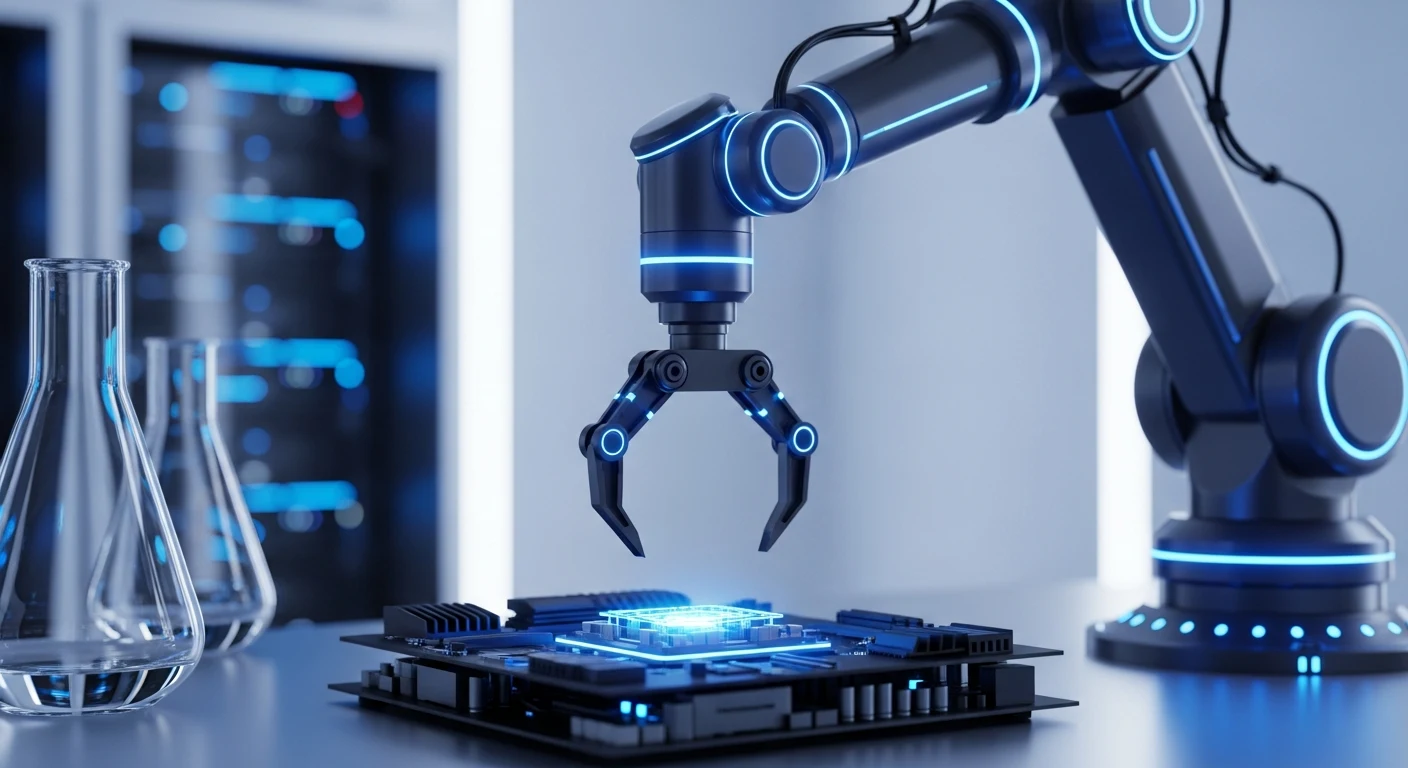
History is littered with terrible technology predictions. Nobel laureate Paul Krugman famously declared that the internet's economic impact would be no greater than that of the fax machine. Even brilliant minds like Albert Einstein and Robert Oppenheimer harbored deep skepticism about the timeline of nuclear fission right before it became a reality. As human beings, we consistently underestimate the speed at which novel innovations transition from science fiction to mundane reality.
Today, we might be making the same miscalculation regarding physical robotics, a field that has historically lagged behind the explosive growth of digital AI. But a new framework from NVIDIA, dubbed ENPIRE, is attempting to close that gap by giving physical robots the one superpower that made digital AI so formidable: the ability to self-improve through relentless, unsupervised trial and error.
In the software world, AI coding agents can write a script, test it, read the error logs, and rewrite the code thousands of times a minute. In the physical world, this loop has traditionally been broken by gravity and chaos. If a robot drops a tool or knocks over a box, a human engineer has to walk over, pick it up, and reset the scene. This manual bottleneck has severely limited how fast and how autonomously robots can learn.
NVIDIA’s ENPIRE software solves this by creating a fully autonomous, closed-loop feedback routine for physical machines. Operating on workstations powered by RTX 5090 GPUs and controlling dual-arm manipulator setups, the system allows AI agents to supervise robots as they attempt complex tasks.
The secret sauce of ENPIRE lies in its automatic evaluation and reset systems. When a robot attempts a highly dexterous task—like using a cutter to slice a zip tie, organizing tiny pins into a box, or even inserting a GPU into a computer motherboard—and fails, the system evaluates the outcome without human judgment. More importantly, it automatically resets the physical environment to a fresh state. Meanwhile, the system's "Evolution" module analyzes the failure logs, consults technical literature, and rewrites the robot's operating code to address the mistake for the next attempt.
The results are striking. By running multiple agents in parallel to explore different solutions, the system autonomously developed policies that achieved a 99% success rate on these challenging physical tasks.
The framework is not without its growing pains. Researchers noted a bottleneck in fleet instrumentation: when the AI agents are busy reading logs, debugging code, or waiting for language model inference, the physical robots sit idle. As researchers scale up the number of robots, keeping the physical hardware fully utilized while the "brain" thinks remains an infrastructure challenge.
Yet, the implications are profound. We are witnessing the early stages of machines learning to instantiate and refine themselves in the physical world. Just as we underestimated the internet, we should be careful not to underestimate what happens when robots no longer need humans to pick up the pieces after their mistakes.
Key Points
- NVIDIA's ENPIRE framework allows physical robots to learn through autonomous trial and error.
- The system uses automatic reset and evaluation mechanisms, removing the need for humans to clean up after failed attempts.
- Robots achieved a 99% success rate on complex physical tasks like cutting zip ties and inserting GPUs.
- A current challenge is hardware utilization; robots often sit idle while the AI agents analyze data and rewrite code.
Why It Matters
By enabling robots to learn and correct their own physical mistakes without human intervention, we are removing one of the biggest bottlenecks in automation and intelligent manufacturing.
Sources: