
The Cloud's Heavy Footprint
The artificial intelligence boom is frequently framed as a high-stakes race for better algorithms, larger datasets, and faster microchips. But increasingly,...
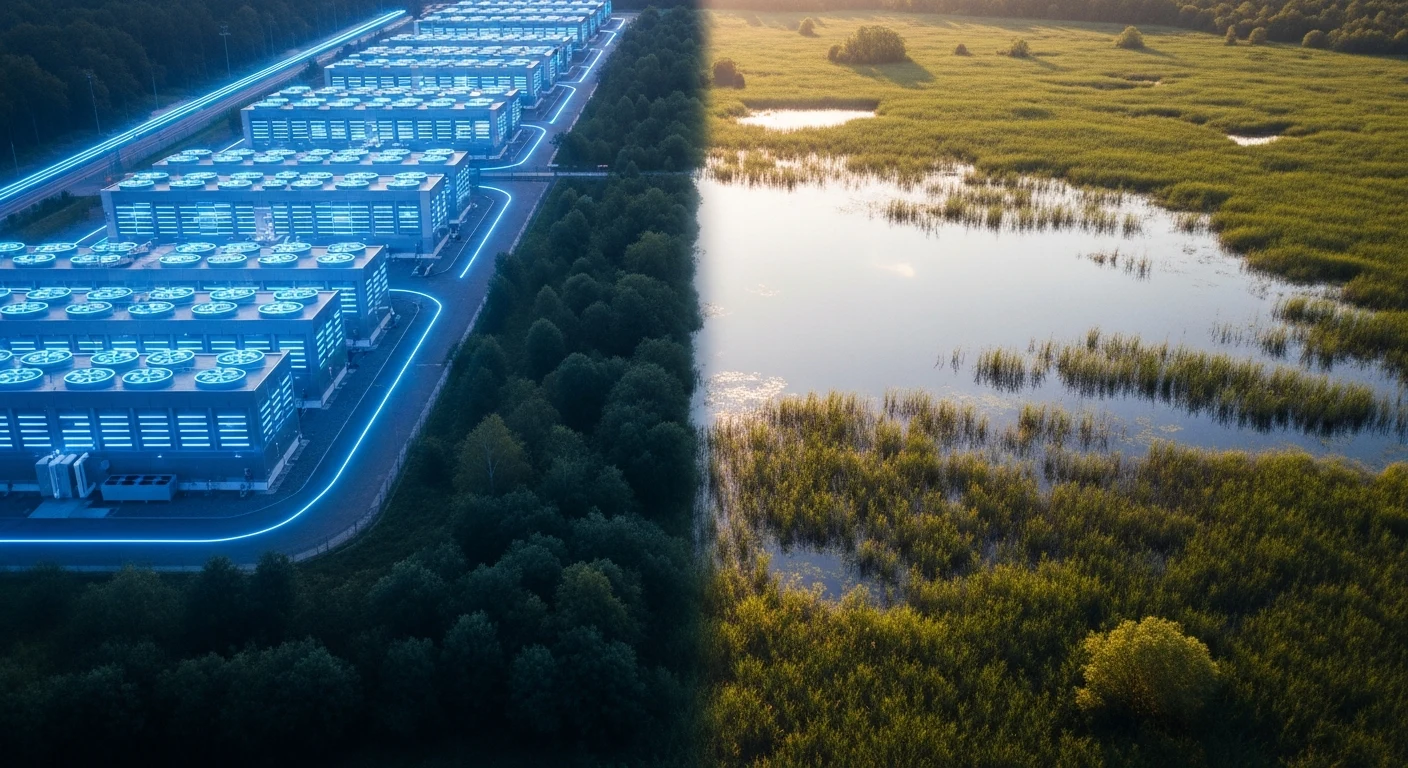
The artificial intelligence boom is frequently framed as a high-stakes race for better algorithms, larger datasets, and faster microchips. But increasingly, the frontier of AI development is becoming a physical battle over dirt, power, and water.
Celebrity investor Kevin O'Leary recently encountered this reality firsthand in Utah. O'Leary had envisioned a colossal AI infrastructure initiative known as the Stratos Project, which initially called for a staggering 40,000-acre data center footprint. To put that into perspective, the proposed site would have dwarfed traditional tech campuses, sprawling in and around the ecologically sensitive Locomotive Springs Waterfowl Management Area.
However, the invisible "cloud" has a very visible, heavy footprint on the ground. The sheer scale of the proposal quickly galvanized local residents and environmental activists, who raised alarms about the industrialization of wildlife habitats and the massive resource drain typical of modern computing hubs. AI data centers are notorious for consuming vast amounts of electricity to power servers and millions of gallons of water to keep them cool—a particularly sensitive issue in arid western states where water conservation is a daily reality.
The grassroots pushback soon escalated to the highest levels of state government. Utah Senate President J. Stuart Adams publicly intervened, demanding that O'Leary slash the project's size by 75 percent—down to a more manageable 10,000 acres—and mandate the use of advanced technologies to minimize water consumption.
Faced with mounting political and community pressure, the "Shark Tank" star chose to compromise. In a formal letter to Adams, O'Leary agreed to cut the project roughly in half, officially removing 19,430 acres from the development plan.
This high-profile concession is more than just a local zoning dispute; it represents a growing friction point in the global AI race. As generative AI models grow more complex, the demand for physical computing infrastructure is skyrocketing. Investors and tech giants are scouring the globe for cheap land and abundant energy to house their server farms. Yet, the Utah case demonstrates that capital and ambition are no longer enough to guarantee construction.
Local communities are increasingly unwilling to bear the environmental costs of the AI revolution without having a say in the process. Moving forward, the expansion of artificial intelligence will not only be constrained by silicon supply chains or software breakthroughs, but by the physical limits of local ecosystems and the willingness of neighborhoods to host the heavy machinery of the future. If the industry wishes to sustain its rapid growth, developers will need to prioritize ecological sustainability and community consensus just as highly as computational power.
Key Points
- AI data centers require massive physical resources, leading to clashes with environmental conservation efforts.
- Kevin O'Leary's planned 40,000-acre data center in Utah faced severe backlash for encroaching on a waterfowl management area.
- Utah state officials demanded a 75% reduction and the implementation of water-saving technologies.
- O'Leary compromised by cutting the project's size in half, highlighting the growing power of community pushback in AI infrastructure development.
Why It Matters
The physical reality of AI relies on massive land and water resources. This case illustrates that community consent and environmental sustainability will be major bottlenecks for future AI expansion.
Sources:
- Kevin O’Leary agrees to downsize massive Utah data center — The Verge - AI