
The Trial Where AI Argued Against Itself
What happens when opposing legal teams unknowingly bring the exact same flawed assistant to court? In a recent federal case in Mississippi, the answer was a...
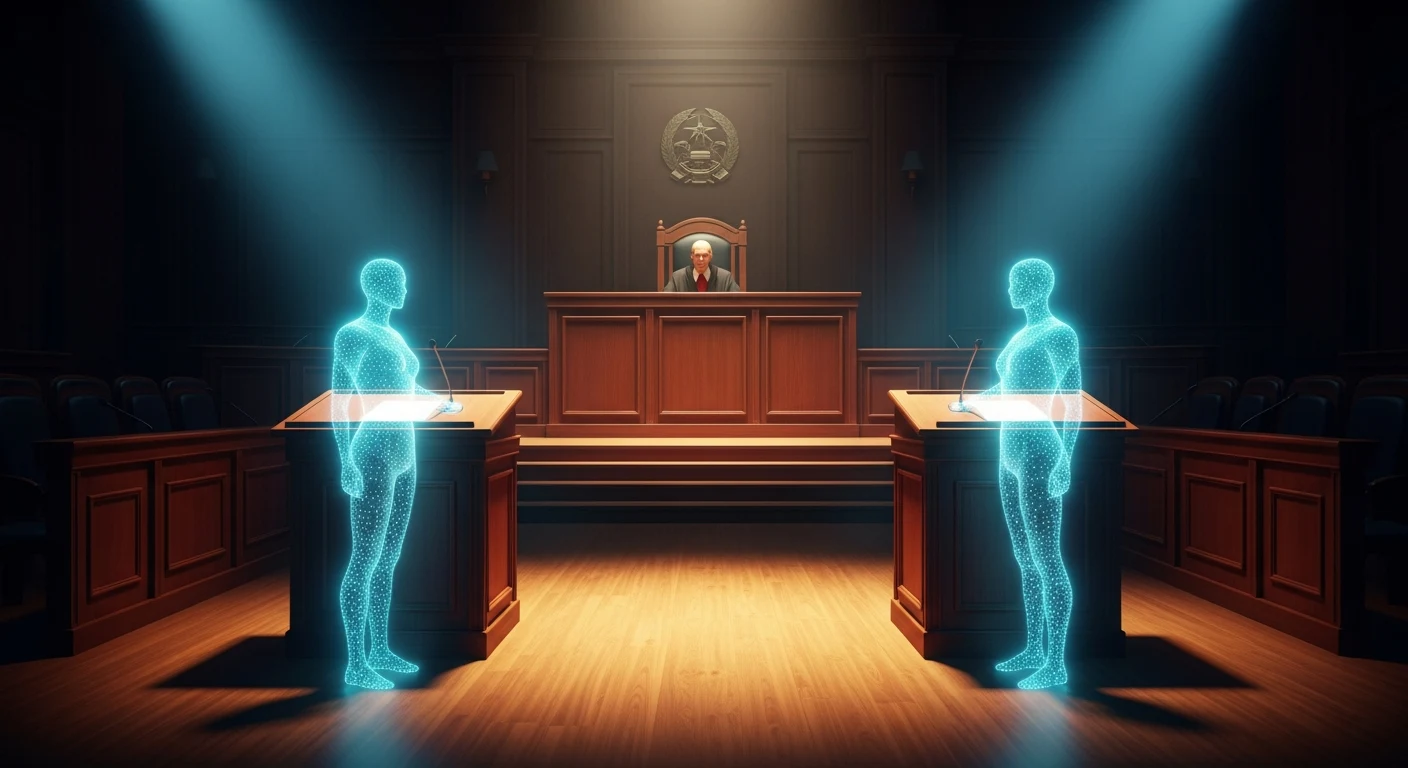
What happens when opposing legal teams unknowingly bring the exact same flawed assistant to court? In a recent federal case in Mississippi, the answer was a canceled trial, disqualified attorneys, and a furious judge.
The case began as a standard contractual dispute between a lawyer and the city of Aberdeen over unpaid legal fees. But it quickly devolved into what legal observers are calling an absurd scenario: attorneys for both the plaintiff and the defendant used generative AI to draft their legal briefs. Unbeknownst to the lawyers, the AI models they relied upon did what they often do when faced with complex queries—they hallucinated. The tools confidently invented fake legal precedents, complete with plausible-sounding citations, to support the opposing arguments.
When Senior U.S. District Judge Sharion Aycock reviewed the filings, she discovered that the court was effectively hosting a debate between two hallucinating algorithms. Her response was swift and severe. Aycock paused the proceedings, canceled the upcoming trial, and disqualified all four lawyers involved in the case.
The consequences didn't end there. Depending on their level of culpability for failing to verify the AI's output, the lawyers were fined between $1,000 and $3,500. Furthermore, two of the attorneys were barred from appearing in her courtroom for two years. In her blistering sanctions order, Judge Aycock emphasized that this situation is a prime example of the immense risks professionals take when they act as a mere "rubber-stamp" for unverified AI outputs.
This incident highlights a growing blind spot in professional AI adoption. Large language models like ChatGPT are incredibly adept at synthesizing information and generating persuasive, articulate text. However, they are fundamentally predictive text engines, not factual databases. They do not "know" the law; they simply predict what a legal document should look like. When professionals outsource their reasoning without diligently checking the underlying facts, they aren't just saving time—they are introducing systemic risks into high-stakes environments.
As artificial intelligence becomes deeply integrated into everyday workflows, the allure of automated efficiency is undeniable. Yet, the courtroom drama in Mississippi serves as a stark reminder: AI can generate the arguments, but it cannot take the oath. Accountability, verification, and the ultimate responsibility for truth remain firmly on human shoulders.
Key Points
- Lawyers for both the plaintiff and defendant in a Mississippi federal case used AI to write legal filings.
- The AI hallucinated, citing non-existent case law for both sides.
- The judge canceled the trial, disqualified all four lawyers, and issued fines up to $3,500.
- The case serves as a warning against professionals acting as 'rubber-stamps' for unverified AI outputs.
Why It Matters
This incident vividly illustrates the real-world dangers of AI hallucinations in high-stakes professions. It underscores that while AI can boost productivity, the responsibility for factual accuracy cannot be delegated to an algorithm.
Sources: