
Rethinking the Humanoid: Why the Best General-Purpose Robots Might Be Headless
When you picture a humanoid robot, you likely imagine a bipedal machine with a head, a torso, and two legs—something straight out of a sci-fi blockbuster. But...
When you picture a humanoid robot, you likely imagine a bipedal machine with a head, a torso, and two legs—something straight out of a sci-fi blockbuster. But what if the most effective humanoid robot looks nothing like a human at all?
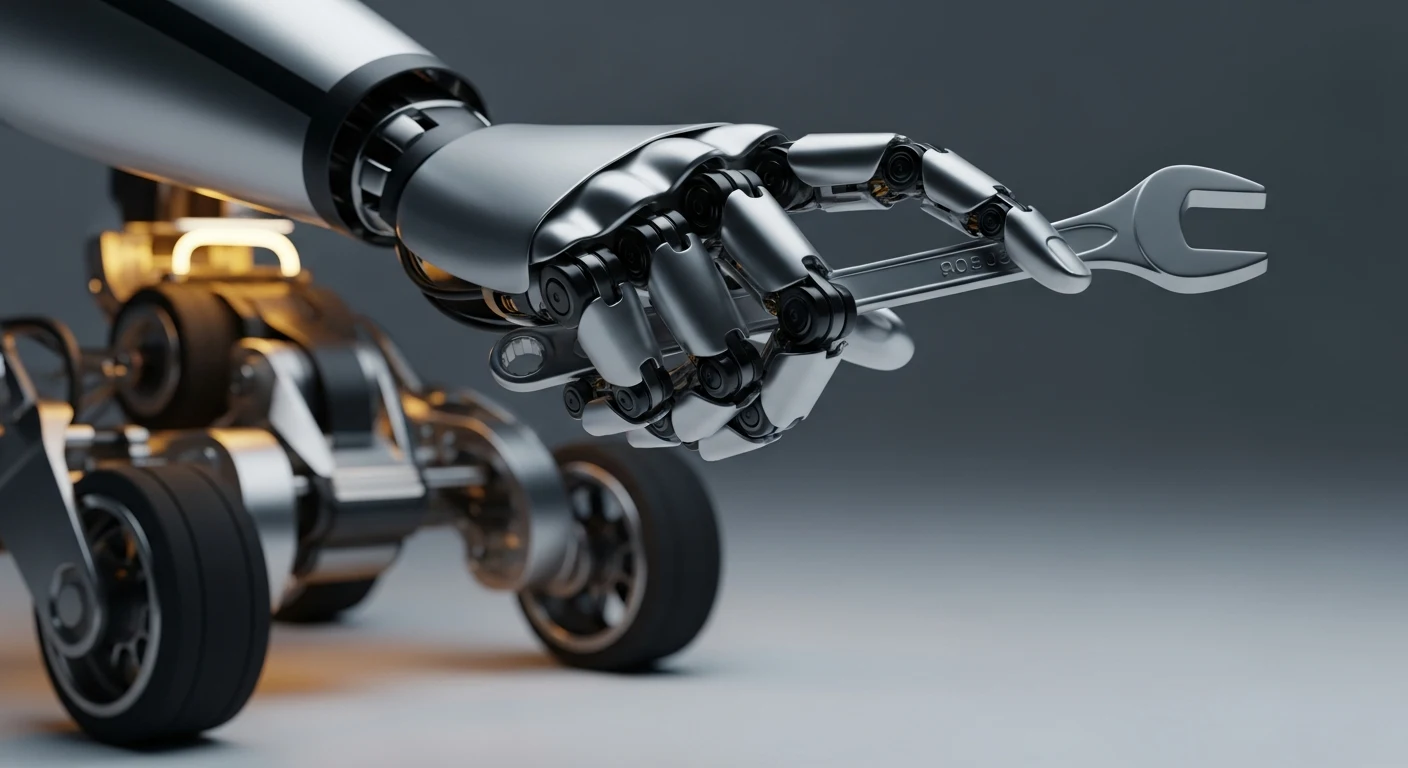
That is the provocative question posed by Genesis AI, a French startup backed by former Google CEO Eric Schmidt. Their newly unveiled robot, Eno, radically departs from the traditional blueprint that has dominated the tech industry's recent robotics boom. Eno does not have a head to nod, nor legs to walk on. Instead, it glides efficiently on a wheeled base and features a flexible structure that can fold down compactly, almost like a piece of deck furniture.
If it lacks a face and legs, what makes it a humanoid? The secret lies entirely in its hands and its overarching design philosophy. Genesis AI operates on a simple premise: a robot should be built around "human capability" rather than human appearance. While Eno ditches the anthropomorphic aesthetics, its hands are meticulously engineered to exactly match the form and function of human hands.
This laser focus on dexterity over visual similarity represents a significant strategic choice in the quest for artificial general intelligence in the physical world. For years, engineers have poured billions into solving the immense physics challenges of bipedal locomotion—getting heavy metal robots to walk on two legs without falling over. By swapping complex legs for stable wheels and eliminating unnecessary "human" features like a head, Genesis AI bypasses those hurdles to focus on what actually interacts with the world: the hands.
The ultimate goal is to create a truly general-purpose machine. Rather than being a bespoke appliance confined to a single chore, such as a machine built exclusively for folding laundry, Eno is designed to handle a wide variety of tasks. Because human environments and tools are designed for human hands, a robot with human-equivalent dexterity can theoretically operate anything from a screwdriver to a coffee maker.
The development of Eno signals an intriguing shift in the robotics industry's mindset. By stripping away the sci-fi vanity of creating a perfect human replica, companies can deliver practical solutions much faster. It suggests that the future of physical automation isn't necessarily about building our mechanical twins. Instead, the next generation of robotic helpers might fully embrace a "form follows function" approach, proving that true human utility doesn't require a human face.
Key Points
- Genesis AI, backed by Eric Schmidt, has introduced a new robot named Eno.
- Eno challenges the traditional humanoid design by eliminating the head and legs, opting for a wheeled base.
- The robot is designed around 'human capability,' featuring hands that exactly match human form and function.
- By focusing on hand dexterity rather than full-body imitation, Eno aims to be a practical, general-purpose robot.
Why It Matters
This shift in design philosophy suggests that the fastest route to useful, general-purpose robots in our homes and workplaces is prioritizing functional dexterity over human-like aesthetics.
Sources:
- The next humanoid robot might not look human at all — The Verge - AI